
Elevating Urban Mobility: Core Mechanisms Defined
**The Hidden Tech Moving You 50 Floors Per Second: Vertical Transportation Solutions Rewritten**
A resident hesitates to carry groceries up three flights of stairs, so a vertical transportation solution like a home elevator or stairlift provides a smooth, motorized ride between floors. These systems use a motor, rails or cables, and a control panel to lift a seated or standing user directly to their desired level. This eliminates physical strain and increases daily independence, making multi-level homes more accessible. For easy use, simply press a button to move between floors with consistent, gentle motion. Vertical transportation solutions transform challenging ascents into effortless journeys.
Elevating Urban Mobility: Core Mechanisms Defined
Elevating Urban Mobility: Core Mechanisms Defined hinge on advanced traction systems and intelligent control algorithms that minimize wait times and energy consumption. By integrating regenerative drives and destination dispatch, these vertical transportation solutions optimize elevator grouping to reduce traffic congestion within high-density structures.
This transforms the vertical journey from a passive wait into a seamless, high-capacity transit layer, effectively extending the building’s horizontal street grid into the sky.
The core mechanism prioritizes predictive load balancing, ensuring that cars respond to actual demand patterns rather than simple call buttons, thus enhancing throughput without requiring additional shafts or physical footprint.
Differentiating Traction and Hydraulic Lift Technologies
Differentiating traction and hydraulic lift technologies fundamentally determines a building’s vertical transportation profile. Hydraulic systems use a piston to push the car from below, which restricts them to around six stories and slower speeds, but their simple mechanics make them cost-effective for low-rise buildings. Traction lifts, by contrast, suspend the car on steel ropes over a sheave, using counterweights for energy-efficient high-speed travel. To select correctly, follow this clear sequence:
- Assess building height—hydraulic for up to six floors, traction for anything taller.
- Evaluate speed needs—hydraulic tops out near 40 meters per minute, traction can exceed 600.
- Consider machine room requirements—hydraulic requires a separate pit and room, traction often fits compactly in the shaft.
The choice directly impacts passenger wait times and long-term energy costs, making it a core design decision.
Machine-Room-Less Systems for Modern Architectures
Machine-Room-Less (MRL) systems represent a paradigm shift, eliminating the bulky overhead penthouse traditionally required for elevator machinery. By integrating the gearless permanent magnet motor directly into the hoistway, MRLs liberate architects to maximize usable floor space and roof aesthetics. This design reduces structural loading, cuts installation time, and lowers energy consumption through regenerative braking. The compact machine beam and controller fit within the shaft, offering quieter, smoother rides without sacrificing travel height. For modern low-to-mid-rise buildings, MRLs are the default choice for optimizing footprint and efficiency.
How do MRL systems handle building sway in tall structures? Controller software actively adjusts motor response to compensate for wind-induced building movement, ensuring passenger comfort without adding mechanical damping.
Escalator Drives and Moving Walkway Gearing
Meshing seamlessly into a building’s design, continuous escalator drives and moving walkway gearing form the mechanical heart of urban flow. For escalators, a chain-driven step system relies on a robust worm gear or helical gear unit that transmits motor torque directly to the handrail and step chain, ensuring synchronized, vibration-free ascent or descent. Moving walkways utilize similar heavy-duty gearing, but often incorporate a longer, flatter chain loop to spread load over greater distances, reducing wear on individual pallets. The critical choice between direct-drive and chain-drive systems hinges on required duty cycles; direct-drive gearing delivers superior energy efficiency for high-traffic transit hubs, while chain-drive units offer easier service access for commercial installations. Both mechanisms demand precise alignment to prevent step bunching or belt tracking issues. Below is a comparison of their core mechanical demands:
| Aspect | Escalator Drive Gearing | Moving Walkway Gearing |
|---|---|---|
| Primary Component | Step chain & handrail drive | Pallet chain & belt system |
| Load Focus | Vertical lift tension | Horizontal pallet friction |
| Wear Point | Chain link pivots | Pallet roller bearings |
Smart Integration and Building Connectivity
In a busy office tower, the elevator knows you are heading to the 15th floor before you tap your badge. This is smart integration and building connectivity in action: vertical transportation solutions that talk to access control, scheduling apps, and even lighting systems. As you approach, the lobby display shows your assigned car, and a soft chime confirms your destination is pre-loaded. Mid-ride, the elevator uses occupancy data to adjust speed and door dwell time, syncing with the HVAC system to save energy on empty trips. The ride feels seamless because the lift is not just moving you—it is a connected node, coordinating with security turnstiles and floor-based sensors to reduce wait times and optimize flow throughout the building’s daily rhythm.
Destination Dispatch and Predictive Group Control
Destination Dispatch and Predictive Group Control optimize vertical transportation by replacing traditional hall call buttons with zone-based lobby kiosks where passengers select their floor before entry. The system algorithmically groups passengers with similar destinations into the same car, reducing travel time and energy consumption. Predictive Group Control leverages real-time traffic analytics to anticipate passenger demand, adjusting elevator assignments dynamically to minimize wait times. This intelligent elevator scheduling reduces average journey time by up to 30% in high-traffic buildings by preventing empty trips and multiple stops for single passengers.
- Passengers enter destination floor at lobby terminal, eliminating guesswork on which car to board
- Group assignments recalculate continuously based on real-time lobby sensor data and historical traffic patterns
- Energy waste decreases because cars move only when carrying passengers toward programmed destinations
- Integration with access control systems allows pre-validated floor clearances before passenger reaches elevator
IoT-Enabled Performance Monitoring Platforms
IoT-Enabled Performance Monitoring Platforms leverage embedded sensors and real-time data transmission to track elevator and escalator operational metrics. These systems analyze parameters like door cycle times, motor vibration, and motor temperature to detect anomalies before failure occurs. By continuously monitoring component wear, they enable predictive maintenance scheduling, minimizing unplanned downtime and extending asset lifespan. Building managers access a unified dashboard showing live status, usage patterns, and energy consumption for each unit. A key benefit is automated fault diagnostics, where the platform identifies the specific subsystem at issue and alerts technicians with precise error codes. This reduces troubleshooting time and improves first-time fix rates.
Q: How do IoT-Enabled Performance Monitoring Platforms enhance passenger safety?
A: They detect irregular door operations or abrupt stop patterns in real time, triggering immediate maintenance alerts that prevent hazardous conditions before passengers are affected.
Seamless Multi-Car Roping and Shaft Optimization
Seamless multi-car roping fundamentally reconfigures lift dynamics by allowing multiple independent cars to operate within a single shaft, each using dedicated ropes that bypass each other through synchronized mechanical guides. This optimization, achieved through destination dispatch algorithms, reduces shaft space requirements by up to 40% while boosting passenger throughput during peak hours. Roping geometry is recalibrated to minimize friction and energy loss across simultaneous vertical movements, ensuring each car maintains precise acceleration curves without cross-interference. The shaft’s structural footprint is thereby minimized, enabling retrofit installations in existing buildings where adding additional hoistways is infeasible without major demolition.
Safety Standards and Regulatory Landscapes
Adherence to international vertical transportation safety standards directly dictates the engineering of critical fail-safes within elevators and lifts, such as redundant braking systems and overspeed governors. The regulatory landscape mandates periodic load testing and inspection protocols that verify structural integrity and door interlock functionality. A pivotal user detail is that modern codes require emergency communication devices to operate during a power failure, ensuring passengers can always summon help. These evolving standards also enforce precise fire-rated landing doors to contain smoke and flames, prioritizing occupant evacuation routes over mere operational convenience.
Emergency Braking Protocols and Overspeed Governance
Emergency braking protocols in vertical transportation are triggered independently by overspeed governors, which mechanically detect when a car exceeds its rated velocity, typically by 10–15%. Upon activation, the governor engages a centrifugal clutch that releases safety jaws onto the guide rails, generating a deceleration force that must remain within human tolerance—usually under 1g—to prevent injury. Overspeed governance calibration is critical: if set too high, the system risks passenger impact; too low, nuisance stops erode efficiency. This calibration often requires balancing thermal brake fade with emergency stopping distances in high-travel scenarios.
Q: Why do overspeed governors use mechanical centrifuges rather than electronic sensors for primary activation? A: Centrifugal systems function independently of electrical power, ensuring fail-safe operation even during total building blackouts or control system failures, which electronic sensors cannot guarantee without redundant backup power.
Door-Reopening Sensors and Obstruction Detection

Door-reopening sensors and obstruction detection systems are the frontline defense against passenger injury in vertical transportation. Modern installations rely on infrared light curtains or 3D time-of-flight sensors that create invisible detection zones, instantly halting door closure upon any intrusion. This technology prevents contact with limbs, bags, or service carts, maintaining smooth traffic flow while ensuring safety. Unlike basic mechanical edges, these electronic sensors sense non-solid obstacles like loose clothing, reducing false reopens.
- Concealed ceiling-mounted sensors cover the full door height, eliminating blind spots common with single-point detectors.
- Multi-beam arrays differentiate between a passing person and a stationary obstruction, preventing premature door movement.
- Self-diagnostic systems alert maintenance to sensor misalignment or dirt accumulation that could compromise detection.
Global Code Compliance for High-Rise Installations
For high-rise installations, global code compliance demands integration of localized building codes with universal safety benchmarks for vertical transportation. Fire-rated hoistway enclosures and emergency elevator recall systems must align with regional seismic and wind-load parameters. A key distinction exists between evacuation elevator requirements, such as those in the International Building Code versus EN 81-73, affecting shaft pressurization and backup power specifications. Unified machine-room-less (MRL) design approval often varies, with some jurisdictions mandating additional governor overspeed testing. Rail bracket anchorage must also be proof-loaded to both European EN 1090 and local structural standards.
| Compliance Aspect | IBC (Americas) | EN 81-20/50 (Europe) |
|---|---|---|
| Emergency power for firefighter lifts | 60-minute runtime minimum | 30-minute runtime with phase-2 override |
| Seismic tie-in requirements | ASCE 7 drift limits | Eurocode 8 spectral acceleration |
Energy Efficiency and Sustainable Operations
Modern vertical transportation solutions achieve energy efficiency through regenerative drives that capture braking energy, feeding it back into the building grid for reuse. Prioritize standby modes for cars, lighting, and ventilation, as these drastically cut idle consumption during low traffic. LED cabin lighting with motion sensors eliminates unnecessary power draw, while efficient gearless machines reduce mechanical friction losses. Implementing group control algorithms minimizes the number of trips by intelligently grouping passengers, delivering direct sustainable operations. For longevity, ensure scheduled maintenance keeps bearings and door mechanisms well-lubricated, as friction is a primary cause of wasted electricity in elevators.
Regenerative Drives and Power Recovery Systems
Regenerative drives in vertical transportation convert the gravitational potential energy of a descending cab into recoverable electricity, feeding it back into the building’s grid rather than dissipating it as heat. This process, known as kinetic energy recapture, can reduce traction elevator consumption by up to 30%. A typical sequence involves:
- Motion controller sensing overspeed condition during descent.
- Inverter directing current from the motor, now acting as a generator, to a DC bus.
- Power recovery unit inverting DC to grid-synchronized AC.
The recovered power offsets lighting, HVAC, or other elevator loads, lowering net operational demand. Regenerative braking efficiency depends on system balancing, duty cycle, and counterweight mass, ensuring maximum return without compromising ride quality.
Standby Modes and Lighting Reduction in Idle Cars
Modern vertical transportation solutions incorporate intelligent standby modes that automatically power down car lighting and ventilation when the cabin remains idle for a set period. This smart idle energy reduction triggers swiftly after passenger egress, eliminating unnecessary kilowatt-hour consumption during off-peak hours. Motion sensors ensure lighting instantly reactivates upon call registration, maintaining user convenience. By cutting lighting power by up to 80% during standby, these systems directly lower operational energy waste without compromising passenger experience or safety.
Low-Viscosity Lubricants and Friction Reduction
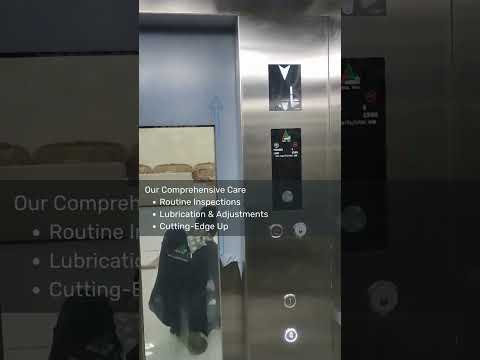
Switching to low-viscosity lubricants for elevator cables directly cuts energy use by reducing the drag that motors must overcome. These advanced fluids create a micro-thin film that minimizes metal-on-metal contact, lowering friction heat and wear on guide rails and bearings. The result is smoother starts, quieter operation, and less strain on the drive system.
- Formulated with synthetic base oils to maintain stability under high load
- Reduces starting torque needed by the motor
- Extends intervals between re-lubrication by resisting oxidation
- Works effectively in both geared and gearless traction machines
High-Rise and Mega-Tower Handling Strategies
Effective high-rise and mega-tower handling strategies in vertical transportation solutions prioritize zone-based elevator grouping to manage sky lobbies and express runs. By dividing the building into vertical clusters, each served by a dedicated bank of cars, traffic peaks from office or residential floors are decoupled. Double-deck elevators further boost capacity by loading two floors simultaneously, reducing the number of shafts needed. Destination dispatch systems pre-assign passengers to specific cars based on their target floor, minimizing travel time and cabin crowding. For mega-towers, incorporating shuttle cars that travel non-stop to transfer floors, with local shuttles handling interstitial stops, ensures efficient handling of mixed-use flows without overloading the core footprint.
Double-Decker Cabins and Sky-Lobby Transfers
For super-tall structures, double-decker cabin and sky-lobby transfers are the definitive solution for massive passenger flow. The strategy divides the building into zones: express double-decker elevators carry passengers from the ground to a mechanical sky-lobby, where they transfer to local shuttles serving upper floors. This process follows a clear sequence to maximize efficiency:
- Passengers enter the lower or upper deck simultaneously, doubling car capacity per trip.
- Express shuttles bypass low-rise stops, racing directly to a dedicated sky-lobby.
- At the sky-lobby, passengers disembark and board local double-decker cabs that serve their specific zone.
This eliminates the bottleneck of single-stop towers, ensuring even peak-hour traffic moves with predictable speed and minimal wait times.
Zoning Algorithms for Peak Traffic Patterns
Zoning algorithms for peak traffic patterns dynamically allocate elevator groups to serve specific floor ranges, reducing passenger wait times during concentrated ingress or egress. By analyzing real-time lobby density, the system partitions the building into virtual zones, each served by a dedicated car group. This prevents cars from making long, inefficient trips across all floors during rush hours. The algorithm must continuously adjust zone boundaries based on pressure sensor data from hall call buttons to prevent car bunching. This approach is critical for peak-hour elevator dispatching, as it minimizes round-trip times and maximizes handling capacity within the tower’s limited shaft space.
Wind Mitigation and Cable Sway Control
In high-rise vertical transportation, wind-induced building sway creates dangerous cable oscillations in elevator systems. Cable sway control mitigates this through tuned mass dampers installed within the hoistway or on the car itself, which counteract lateral forces. Roping configurations like double-wrap or multi-rope systems reduce pendulum amplitudes. Differential pressure sensors adjust compensation ropes in real time to maintain tension equilibrium. Speed governors with active damping algorithms decelerate cars before resonant frequencies destabilize cabling. These integrated mechanical and software solutions prevent cable entanglement, ensuring safe operation during extreme gusts.
Aesthetic and User Experience Enhancements
Modern vertical transportation solutions prioritize aesthetic and user experience enhancements through integrated design. Customizable ambient lighting systems now dynamically adjust to reduce anxiety and improve spatial perception, while interior materials like antimicrobial copper alloys and backlit stone panels elevate tactile and visual quality. User interfaces feature intuitive touchscreens with haptic feedback, and audio systems deliver directional sound cues for accessibility. Enhanced ventilation systems with silent airflow maintain comfort without disrupting the cabin’s visual harmony. These elements collectively transform elevators from purely functional utilities into seamless, branded parts of the built environment, directly influencing passenger satisfaction and dwell-time perception.
Custom Cabinetry, Lighting, and Digital Interfaces
Custom cabinetry transforms vertical transportation solutions into bespoke statements, featuring integrated storage and finish selections that mirror high-end interior design. Strategic lighting, from ambient LED cove strips to task-focused downlights, sculpts the car’s atmosphere and enhances perceived spaciousness. Digital interfaces then serve as the control hub, offering intuitive touchscreens that adjust cabinetry lighting color scenes and preset floor stops. The curation follows a clear sequence:
- select cabinet veneers and hardware to define the tactile aesthetic,
- integrate programmable ambient lighting zones within the cabinetry panels, and
- configure the digital interface for seamless user interaction with both lighting presets and access requests.
Touchless Call Buttons and Biometric Access
Touchless call buttons and biometric access redefine the elevator experience by eliminating physical contact and streamlining verification. Infrared sensors or gesture recognition allow users to summon a car with a simple hand wave, enhancing hygiene and speed. For secured floors, fingerprint or facial recognition grants immediate, personalized entry without fobs or keys. This integration directly supports seamless vertical transportation, reducing wait times and touchpoints while elevating user confidence in shared spaces.
Touchless call buttons and biometric access EKCNE deliver contactless, efficient, and secure elevator operation, prioritizing user convenience and hygiene.
Audio Guidance and Emergency Communication Systems
Modern vertical transportation solutions now integrate audio guidance and emergency communication systems to transform the user experience from passive transit to assured, intuitive interaction. Acoustic navigation, including directional chimes and voice announcements, cues passengers precisely for car arrival and door opening, eliminating guesswork. In emergencies, these same systems evolve into clear, two-way communication channels linking riders directly to trained responders, with voice-lift technology ensuring audibility over ambient noise. This seamless fusion of wayfinding and safety creates an environment where every auditory signal—from a soft arrival tone to a distress call confirmation—reinforces user confidence and control, making the cabin feel responsive and secure.
Maintenance and Lifecycle Management Approaches
Effective maintenance and lifecycle management approaches for vertical transportation solutions rely on predictive, data-driven strategies rather than reactive fixes. By deploying IoT sensors and real-time monitoring, operators can anticipate component wear, scheduling interventions precisely when needed to avoid costly downtime. A robust lifecycle plan also mandates systematic modernization—replacing critical assemblies like controllers or hoist ropes at predetermined intervals based on usage data, not age. This proactive stance extends equipment lifespan, enhances operational reliability, and lowers total cost of ownership. Adopting a cradle-to-grave view ensures each unit performs optimally until end-of-life, at which point strategic replacement is executed to maintain building efficiency.
Predictive Diagnostics Based on Ride Quality Data
Predictive diagnostics leverage continuous ride quality data, analyzing vibration, acceleration, and noise patterns to forecast component degradation before failure occurs. By detecting subtle shifts in car performance, such as increased lateral sway or irregular door operation, the system identifies worn guide shoes, misaligned rails, or bearing fatigue early. Condition-based elevator maintenance then prioritizes intervention on affected components, eliminating unnecessary calls and preventing sudden breakdowns. This data-driven approach extends equipment lifespan by addressing root causes rather than symptoms, directly enhancing passenger comfort and reducing downtime for repairs.
| Data Type | Detected Issue | Proactive Action |
|---|---|---|
| Vertical oscillation anomalies | Wire rope or sheave wear | Schedule rope inspection and lubrication |
| Door operation time variance | Belt stretching or roller binding | Adjust tension or replace rollers |
| Cab vibration frequency shift | Guide rail misalignment | Realign rail joints or shim brackets |
Remote Software Updates for Control Units
Remote software updates for control units eliminate the need for on-site technicians to manually reflash firmware. Updates are delivered via encrypted networks to the elevator or escalator controller, enabling rapid deployment of performance and safety enhancements without service interruption. The process follows a clear sequence:
- The central management system validates the new firmware against the unit’s hardware profile.
- The update is transmitted in staged packets with integrity checks to prevent corruption.
- The controller applies the update during a low-traffic period or scheduled idle window.
A rollback partition in the control unit allows instant reversion if the update causes anomalies, ensuring no operational downtime.
Modernization Retrofits for Legacy Installations
Modernization retrofits breathe new life into older elevators and escalators without a full teardown. You swap in energy-efficient drive systems and smart controllers to boost performance and cut wait times. The typical sequence:
- Audit existing machinery and cabling,
- replace the motor and control panel,
- upgrade door operators and safety sensors.
This approach often keeps your cab and shaft intact, saving weeks of downtime while giving riders smoother, quieter trips.
How Modern Lift Systems Move People and Goods Efficiently
Key Components That Make Vertical Transport Reliable
Different Drive Types: Traction vs. Hydraulic vs. Pneumatic
Choosing the Right Elevator System for Your Building Type
Matching Capacity and Speed to Traffic Patterns
Space Requirements for Machine-Room-Less Designs

Smart Features That Improve Daily Use of Vertical Transport
Destination Dispatch for Reducing Wait Times
Energy Regeneration and Standby Modes
Touchless Controls and Voice Activation

Practical Tips for Maintaining Peak Performance
Scheduling Routine Inspections for Key Mechanical Parts
